

If you love baking and are in the kitchen regularly, this one's for you: the essential baking equipment every kitchen should have. Keep these on hand and you can't go wrong.
Here's a basic guide to the baking tools every beginner should know about and keep in the kitchen. By the end, you'll be ready to start making simple bakes. Ready? Let's go.
Baking Equipment for Mixing
Most homes already have basic kitchen equipment such as pots, pans, spatulas and ladles. But what extra tools do you need to start baking? Let's find out.
1. Balloon Whisk
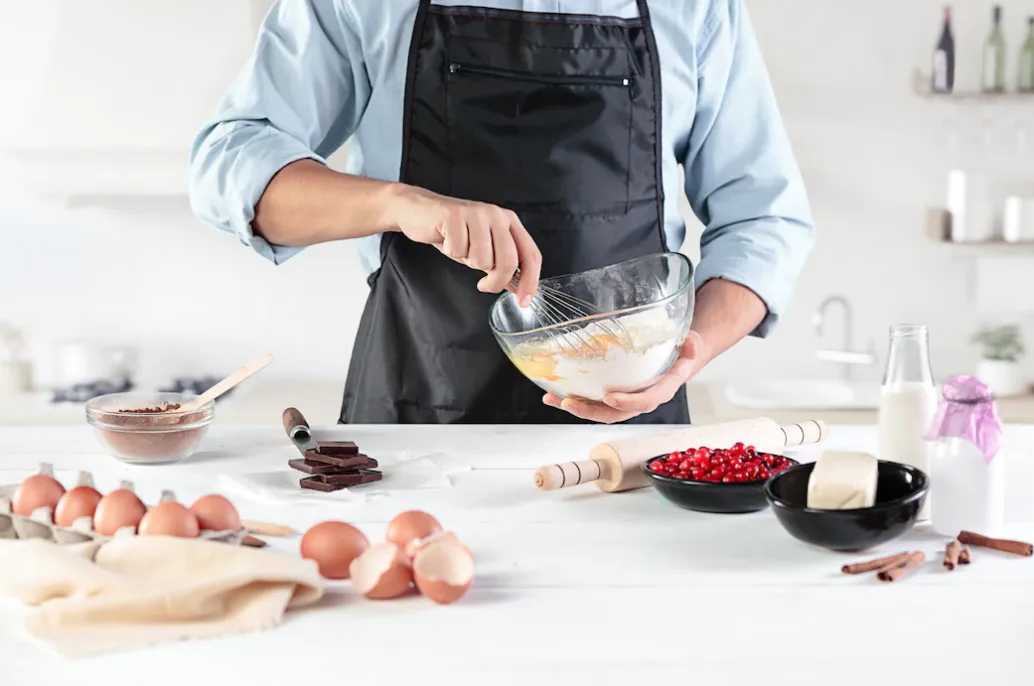
A whisk is indispensable in baking. It is used to beat or fold ingredients together or whip eggs until fluffy, and is best for smaller quantities. Whisks are made of stainless steel or silicone and come in a range of sizes to suit your bowl and the amount of ingredients.
2. Electric Mixer
An electric mixer comes in two types: the stand mixer and the hand mixer. When baking in larger quantities it saves effort and mixing time, and the mixture rises to a better volume than with a hand whisk alone.
2.1 Hand mixer: ideal for beginners because it is inexpensive and suits small batches, making it better for home baking.
2.2 Stand mixer: larger and suited to fairly big batches, but more expensive. It consists of the machine, a bowl and three attachments, used for different jobs:
- Flat beater (paddle): for cream cheese, butter, butter cakes, and firm or solid ingredients.
- Dough hook: for kneading dough only, whether bread dough, pie dough or steamed bun (salapao) dough.
- Wire whisk: works like a hand whisk, for whipping eggs until fluffy or making airy cakes.
3. Spatula
A spatula is used to stir or fold ingredients together. There are generally two types, plastic and silicone. Silicone spatulas cost more but scrape bowls clean because they are more flexible, and they are heat-resistant too.
4. Mixing Bowls
Used to combine ingredients, mixing bowls come in many sizes and are usually stainless steel or glass. Stainless steel is more popular because it is durable, doesn't break and holds both heat and cold better. Beginners should have at least three sizes, small, medium and large, because one recipe may need more than one bowl.
5. Flour Sifter
Used to sift flour and other dry ingredients together so they are finer and free of lumps before being mixed with the liquid ingredients.
6. Rolling Pin
Used to roll out tart pastry, bread dough or any dough that needs flattening before baking. Most are made of wood; after use, wash and dry them thoroughly or they will go mouldy.
Baking Equipment for Weighing and Measuring
In baking, ratios and accurate measuring are crucial: if you use the wrong proportions, your bake may fail. So what measuring tools are there, what do they look like and how do you use them? Let's take a look.
1. Measuring Spoons
Used for measuring small quantities of both liquid and dry ingredients. In Thailand you usually see just 4 sizes: 1 tablespoon, 1 teaspoon, ½ teaspoon and ¼ teaspoon. Abroad, sets often have 6 sizes: 1 tablespoon, ½ tablespoon, 1 teaspoon, ½ teaspoon, ¼ teaspoon and ⅛ teaspoon.
2. Measuring Cups
There are two types of measuring cup: dry and liquid.
2.1 Dry measuring cups: for larger amounts of dry ingredients such as flour, sugar and grains. They usually come in 1 cup, ½ cup, ⅓ cup and ¼ cup sizes.
2.2 Liquid measuring cups: for larger amounts of liquids such as milk, oil or water. They usually hold 1 or 2 cups and are marked in several units, including millilitres, ounces, cups and pints, with sub-markings for ½, ⅓ and ¼ cup.
3. Digital Scale
A digital scale weighs both liquid and dry ingredients. Simply place your container on the scale and press Tare to zero out its weight before adding the ingredient. This gives you the true weight of the ingredient and is more accurate than using measuring cups.
And that's our round-up of essential baking equipment. With these in your kitchen, your baking day is sure to go smoothly!


