

Most of us have a soft spot for desserts, don't we? Today we're taking a tour of some French desserts well worth knowing about. Every one of them is a treat, so let's dive in.
A Short History of French Pastry
Let's get better acquainted with the world of sweets. Pastry-making actually dates back to the Middle Ages. Ice cream was first served, together with pâte à choux (choux pastry), at the wedding of Catherine de Médicis and King Henry II. In the 17th century, Anne of Austria brought chocolate from Spain into France and on to Versailles.
The craft truly took shape in the 19th century, when the art of French pastry flourished and produced many pâtissiers. One of the best known today is Pierre Hermé, the "wizard of desserts", who has built a global reputation and spread this art around the world. Before we go further, here are a few key terms related to French desserts.
- Pâtisserie – the art of making pastries and baked goods from flour, sugar, butter, milk and eggs, as well as French- and Belgian-style cakes.
- Pâtissier – a pastry chef: a specialist who makes French- and Belgian-style pastries and cakes.
Popular Classic French Pâtisserie
1. Millefeuille
Millefeuille literally means "a thousand leaves" in French. Sheets of puff pastry are layered with whipped cream or jam, then finished with icing sugar and an elegant pattern of chocolate lines. Americans call it a "Napoleon", and there are several stories behind the name. Some say it was served at a banquet for Emperor Napoleon during a visit to Denmark; others say the name is a corruption of "Napolitain", meaning a pastry from Naples, where layered pastry was also popular. Another tale claims Napoleon ate millefeuille the night before the Battle of Waterloo and went on to win.
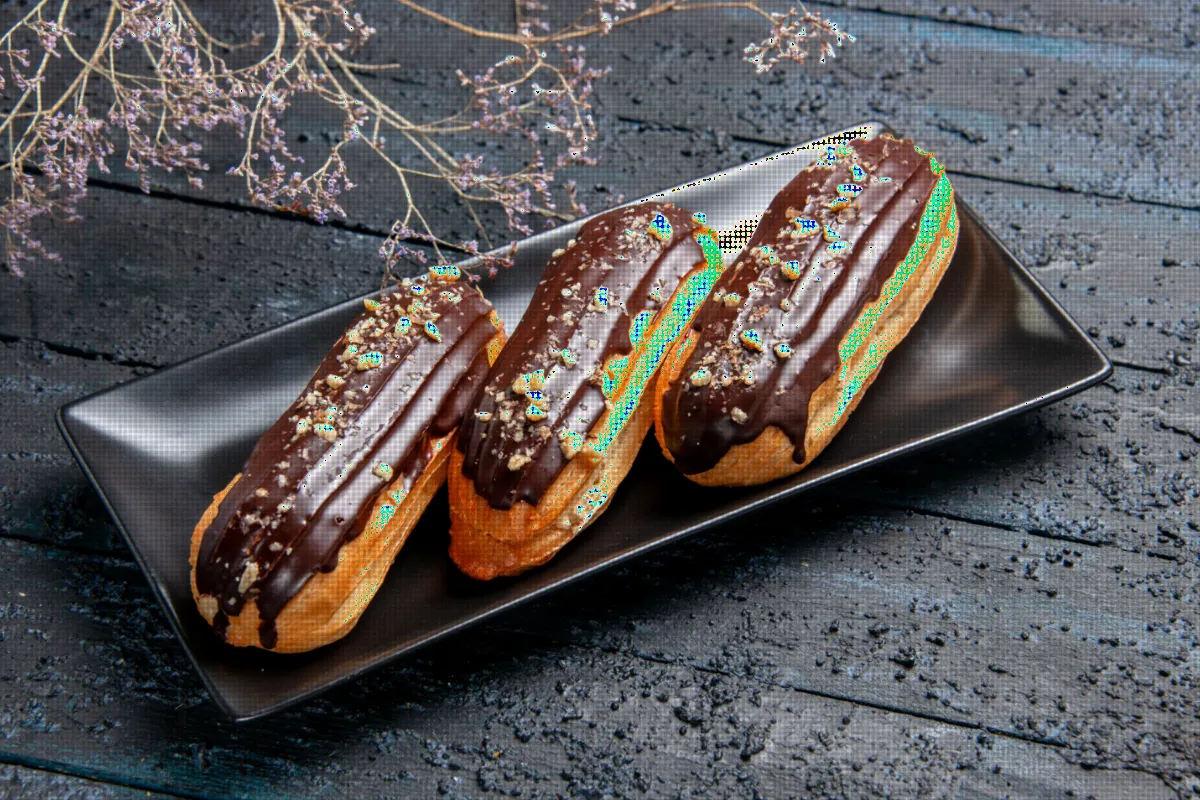
2. Chocolate Éclair
An éclair is a long, oval pastry made from flour, fat and eggs. The shell is light yet holds its shape, and the hollow inside is piped with cream in various flavours. It is topped with icing and prettily decorated, and comes in many flavours. The small round cream-filled pastry that many people call an éclair is actually a "choux cream" (cream puff), made from the same dough.
3. Macarons
Macarons are round confections made from egg whites, ground almonds and sugar whipped together and baked like small cookies, then sandwiched in pairs around a filling. Their signature texture is a crisp outside and a gooey centre that melts in the mouth, and the shells are coloured to match the filling. They date back to the French Revolution, when food was scarce and expensive, so cheap ingredients such as sugar, egg whites and almonds were whipped together and baked into little flying-saucer shapes. They became very popular, and later Pierre Hermé, the French "wizard of desserts", reinvented their look and created new flavours, turning macarons into a worldwide hit.
4. Saint-Honoré
A classic French dessert with a base combining puff pastry and choux pastry. It is topped with cream, ringed with caramel-dipped cream puffs and crowned with whipped cream. It is named after Saint Honoré, the patron saint of pastry chefs and bakers.
5. Tarte Tatin
An upside-down apple tart: apples are cooked in butter and sugar, then baked again under a pastry crust. The story goes that at the Hotel Tatin in France, a chef who came into the kitchen late meant to make an apple pie but left the apples simmering on the stove until the whole place smelled of caramel. Making the best of it, the chef covered them with pastry and put them in the oven, then flipped the tart over to serve with the pastry on the bottom. The apple tarte Tatin was a huge hit with guests and went on to become popular worldwide.
6. Opera Cake
A layered French cake made of joconde (almond sponge cake) soaked in coffee syrup, layered with coffee buttercream and chocolate ganache, and finished with a chocolate glaze on top. The name comes from its complex, luxurious layers, which resemble an opera performed in several acts.
7. Paris-Brest
A ring-shaped pastry with a hole in the centre, designed to look like a bicycle wheel. The choux pastry ring is sliced horizontally, filled with cream and finished with icing sugar and toasted flaked almonds. Today the cream comes in many flavours; the one pictured, for example, includes strawberries for extra flavour. It is named after the Paris–Brest bicycle race, a round trip of 1,200 kilometres, and was served to the cyclists when they reached the finish.
8. La Tarte au Citron Meringuée (Lemon Meringue Tart)
This tart has a pastry base filled with tangy lemon custard and topped with soft, fluffy meringue made from egg whites, giving a perfectly balanced sweet-and-sour flavour. Its exact origin is unclear, but lemons have been used in European kitchens since the Middle Ages because of their sour taste and very long shelf life, which made them suitable for special festivals. Meringue, an egg-white confection, first appeared in a French cookbook and later became widely popular.
So, what do you think of these French desserts worth knowing? Just reading about them is enough to make you hungry!


